
Insights
5G NTN insights, resources and knowledge from the team at Gatehouse Satcom.
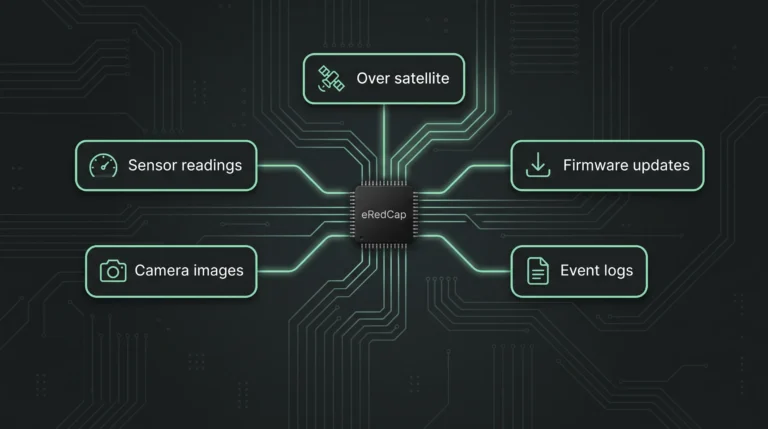
What is eRedCap?
5G IoT at 10 Mbit/s, and what it means over satellite eRedCap, short for enhanced Reduced Capability, is a 5G device class defined by 3GPP in Release 18. It takes the Release 17 RedCap device and caps its peak data rate on a terrestrial network at 10 Mbit/s in both directions, with an option to…
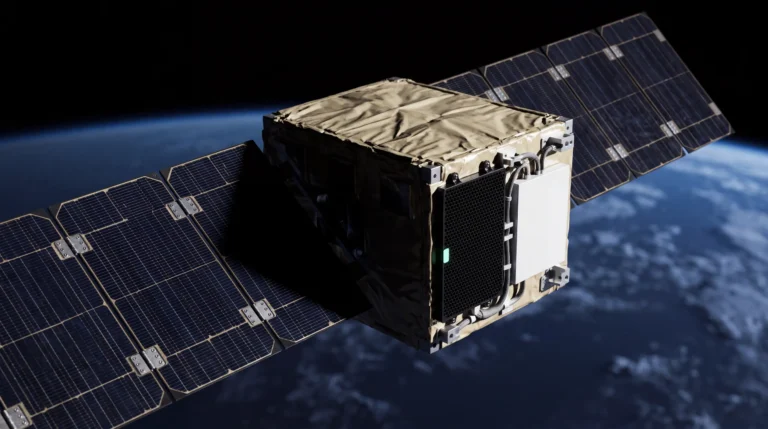
Why payload power budgets put a ceiling on the capacity you can sell
The NTN ecosystem has reached a useful turning point. On the gain side, 3GPP standardisation is replacing proprietary silos with a common framework, unmodified handsets and eRedCap devices are opening consumer and IoT volume, mobile network operator demand is becoming real, and regenerative payloads are moving more of the gNB into orbit. That creates a…
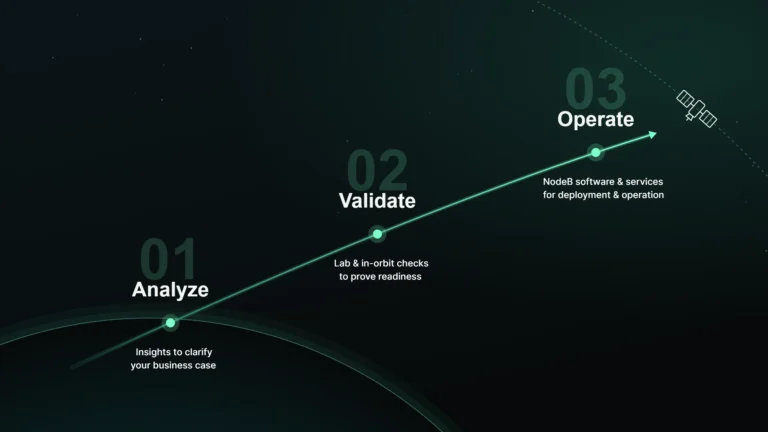
Analyze, Validate, Operate: The path from NTN idea to live service
Every NTN service starts as an idea and has to end as something that works in orbit. Between those two points is a journey, and we have spent 25 years learning where it runs smoothly and where it gets difficult. This piece walks through that journey the way we take customers through it, in three…
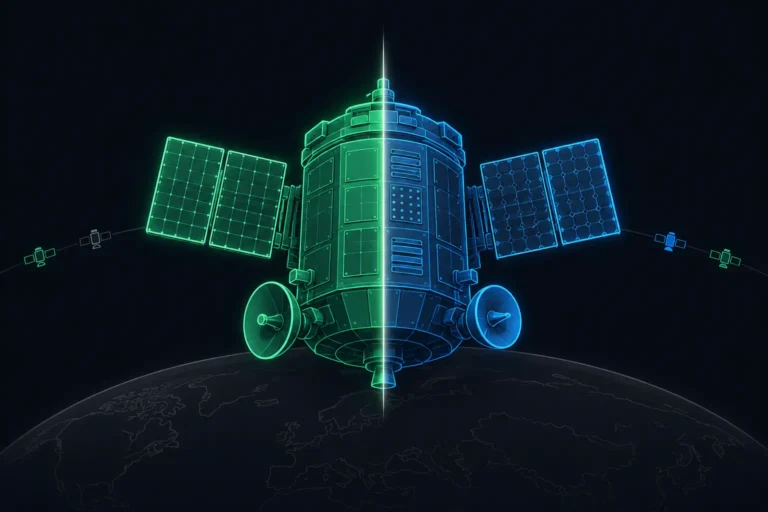
Software lifecycle management for regenerative NTN payloads
Updating a gNB in orbit takes weeks across a constellation. During that campaign, satellites running different software revisions must hand traffic between each other with protocol consistency intact.

Hybrid BGAN and 5G NR NTN: Building Deployment Resilience from Complementary Link Characteristics
A hybrid satellite architecture only has engineering value if the two bearers fail differently, scale differently, and serve distinct roles across the deployment lifecycle. Combining BGAN with 5G NR NTN exploits the specific propagation, protocol, and ecosystem characteristics of each path to maintain operational continuity while validating and scaling a standards-based system. This article examines…

Why time system mismatches cause silent failures in NTN deployments
An NTN system draws timing inputs from multiple sources. UE’s including IoT devices synchronize to GPS time via GNSS receivers. Orbital data and ephemeris predictions are commonly delivered in UTC. Computer infrastructure may internally timestamp in TAI. Operators schedule beams and analyze logs in UTC or local time. Each of these time systems is offset…

2026 is the year it got real
After years of trials, Mobile World Congress 2026 marked a fundamental shift in market momentum. Here is why the conversation has moved from "if" to "how fast" for 5G satellite connectivity. Standing on the floor of Fira Gran Via this year, the atmosphere felt fundamentally different. If MWC 2022 was about the "promise" of satellite-to-phone…

NB-IoT and 5G NR NTN Hybrid Scales Satellite IoT Without Burning Power
Most organizations do not need “satellite connectivity”. They need specific outcomes. Sensors that stay alive for years. Assets that stay visible beyond terrestrial coverage. Devices that do not become expensive to operate the moment the link budget gets tight. That is why the most realistic architecture for today’s NTN projects is not a single air…

BGAN and 5G NR NTN: Designing Continuity into a Standards-based Satellite Architecture
A combined solution using BGAN alongside 5G New Radio NTN designs continuity into the system while moving towards a standards-based future. The most serious programmes are building an on-ramp, with both bearers serving defined roles across the deployment lifecycle. Why this matters now 3GPP Release 17 made NTN a standardized air interface. That was the…